


Search Vehicle Records in Illinois by VIN
If you’re thinking of purchasing a used car or renewing your registration in the State of Illinois, you should get a good VIN or plate lookup in your arsenal. This search will produce a vehicle history report that can uncover hidden problems, verify the title, and help you make informed decisions.
With IllinoisVehicle.org, you can have all you need at your fingertips. For the Prairie State, you can find information on vehicle titles, a vehicle’s history, and what to watch out for when inspecting.
Let’s explore this further.
Your Trusted Guide to Illinois Vehicle Records
It may be daunting for anyone to find their way through the Illinois Secretary of State’s (SOS) service. Rather than go through the vigorous process, you can use IllinoisVehicle.org. Even if you want to buy a used car, transfer ownership, or check a car’s accident history, this website is a top choice.
IllinoisVehicle.org can guide you with:
SOS guidance: With this website, it is easy to find clear and easy steps for you to renew your license, obtain vehicle registrations, title transfers, or locate the DMV offices.
Illinois-specific information: You can find unique information for the state, such as vehicle-use tax, registration renewal & fees, proof of insurance, and requirements for special vehicles like ATVs or trailers.
Time-saving insights: There are great insights on the website that give you quick information at a glance. These insights make it easy for you to obtain quality information and save you from visiting the SOS.
Practical tips for drivers: The website offers practical guides to drivers on examples of common violations, accident-reporting laws, and other tips that can keep you safe on the road.
When drivers access IllinoisVehicle.org, they find useful information in one place. This tool is convenient for drivers and road users.
What Your Illinois Vehicle History Report Includes
Through your car’s VIN, you can search for vehicle records and access information that is compiled from SOS databases, insurance records, and law enforcement records.
When you obtain an Illinois vehicle history report, you will typically find:
Title history: You can find out if the title is clean, branded, or has a salvage/lien record. You will also know how many owners bought the vehicle, their states, and when the title or registration changed hands.
Accident history: You can find documented histories about collisions, frame damage, or major repairs carried out on a vehicle.
Recalls: This will include any outstanding recalls for the vehicle.
Odometer readings: With the report, you can confirm any possible mileage rollback or tampering.
Service and maintenance records: Here, you can track a vehicle’s upkeep, from routine maintenance such as oil changes and tire inspections to major repair work.
Registration Status: You can see whether the vehicle’s registration is active or lapsed from the SOS Vehicle Services system.
Theft reports: A simple check will reveal information if the vehicle has been previously reported stolen and recovered.
Anyone who wants to purchase a used car will need all this info. Such an individual or driver will be equipped with the right tools and knowledge to avoid pitfalls or traps from mischievous sellers.
Why Check Vehicle History in Illinois?
In Illinois, the used-car market is becoming competitive. You must be careful before you make any purchase.
If you intend to purchase a used vehicle, the Secretary of State strongly urges you to verify the vehicle’s background history. You can utilize the vehicle’s VIN to get the report. This report can help you avoid fraud, have peace of mind, and comply with Illinois road laws.
These are reasons why you must check a vehicle's history in Illinois:

Detecting problems
There is a saying, “fine feathers do not make fine birds.” This statement is true, especially for anyone who buys a used car. A car may look good with a wonderful color on the outside. Beneath the surface, it is a different situation.
Certain damages may be hidden from view. Illinois’ lemon law only applies to new and leased vehicles. However, the state still protects used car buyers through the federal Magnuson-Moss Warranty Act for defective vehicles. For used cars in Illinois sold as "as-is", the dealers or auto auction house must provide a limited powertrain warranty for 15 days or 500 miles, whichever comes first.
A search by VIN can reveal a lot about the history of a car, previous titles, or damages that were hidden during a routine check.

Avoid Title Fraud
When you get the vehicle history, you will be informed about any notation, including flood, rebuilt, specially constructed, not actual mileage, or mileage that exceeds mechanical limits. Salvage vehicles cannot be registered in Illinois.

Verifying ownership
A VIN lookup reveals the true identity of the vehicle’s owners to the buyer and seller. This can prevent illegal sales and title disputes.

Avoiding fraud
Odometer fraud is a growing scam that you can avoid by checking your VIN report. Sellers can sometimes alter the mileage of a vehicle. Recently, CARFAX indicates that more than 2 million vehicles on the road may have had their odometers rolled back, emphasizing the need to check a vehicle’s history. That's up more than 18% since 2021.
Illinois ranks fifth in the nation for odometer rollbacks, making it crucial to obtain a vehicle history before buying.
Complying with Illinois SOS Regulations
The SOS provides rules and regulations for road users in Illinois. The SOS ensures that most vehicles complete a mandatory emissions test before they are registered. Some vehicles are exempt, including diesel-powered, electric, and antique vehicles. To certify a used car, a vehicle history report is needed.
How Does an Illinois VIN Report Work?
All vehicles (from 1981 onwards) have a Vehicle Identification Number (VIN). This is a 17-digit code that contains specific information about the car, like the country of origin, manufacturer, year, make, model, and engine specifications.
The VIN serves as the car’s individual identity marker. It provides both parties (buyer and seller) with a proper understanding of their vehicle’s history. The VIN is a combination of letters and numbers that uniquely identifies a vehicle.
Every VIN is structured into three sections:
The manufacturer identifier: identifies the country and manufacturer
The vehicle descriptor: describes the body, model, and engine type
The vehicle identifier: provides the production and serial information
To start, you’ll need to first find the VIN by looking at the driver’s side of the dashboard.
Here's how the search process works on the site:
1. Find your VIN
Find the 17-digit VIN on the vehicle's registration documents or use the guide below.
2. Enter the VIN into the search tool
Enter the VIN on IllinoisVehicle.org’s VIN lookup tool on the homepage
3. The website scans official databases
The search will compile a vehicle history report from DMV records, police reports, and insurance databases.
4. Receive the report
Your vehicle history report will be ready within moments with reliable results you can trust.
The report will include:
Title History
Records
Readings
Readings
Information
Inspection History
When you obtain a good VIN report, it enables buyers, owners, and sellers to make informed decisions and avoid any hidden risks or potential legal issues. With IllinoisVehicle.org, drivers can get peace of mind once they obtain their verified vehicle’s history.
How to Find the Vehicle's VIN Number?
You can locate your VIN easily on your vehicle. You may check the following locations:
The driver’s side dash. You can find the VIN easily there.
The sticker on the driver’s side door frame.
Legal documents, including vehicle registration, title, or insurance papers
Part of the engine block
Illinois Vehicle Statistics
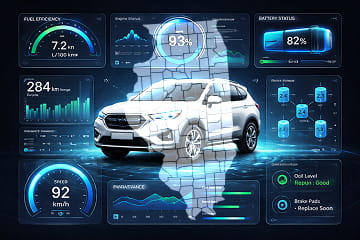
The Prairie State has over 10 million registered vehicles on its roads, including hybrids and electric vehicles (EVs).
This year, Governor JB Pritzker, Attorney General Kwame Raoul, and the Illinois Department of Transportation announced that $18.4 million in grants will fund the construction of 25 electric vehicle charging stations along interstate corridors.
Over 156,000 electric vehicles (EVs) and 453,000 hybrids are registered.
The most popular used cars in Illinois include the Chevrolet Equinox, Ford F-150, Chevrolet Silverado 1500, and Jeep Grand Cherokee. SUVs are the most common vehicle type in the state.
Vehicle sales in Illinois have been influenced by national trends that indicate a decline. Although there is a surge in demand for hybrid and electric vehicles, the decline may be due to rising costs, tariffs, and inflation.
FAQ
Do All Vehicles Have a VIN?
Yes, the National Highway Traffic Safety Administration (NHTSA) enforces that all vehicles from 1981 onwards have a VIN.
What specific details does the VIN report reveal about accidents?
The VIN can reveal the vehicle's accident records. The report includes data on the type of accident, the date, the location, and the severity of the damage. The report can also share the title brands and whether the insurer has written the car off.
Does the report show who the previous owner was?
Because of privacy laws, a standard Illinois Vehicle History Report will not show the name of the previous owner. But it will show the number of previous vehicle owners. For official ownership records, use the Illinois Secretary of State Vehicle Services Department website.
Do I need the VIN or the license plate number to run a search?
Yes, both the VIN and the license plate number are unique identifiers. You can use both, but some services will require the VIN for more detailed vehicle history reports.
How long does it take to receive the full vehicle history report?
When using IllinoisVehicle.org, you’ll receive the full vehicle history report instantly.
What if the VIN or Plate I enter shows no records?
This can happen for a number of reasons, like errors in entering the correct VIN or a system error with the database. It’s recommended that you check you have entered the VIN correctly.